
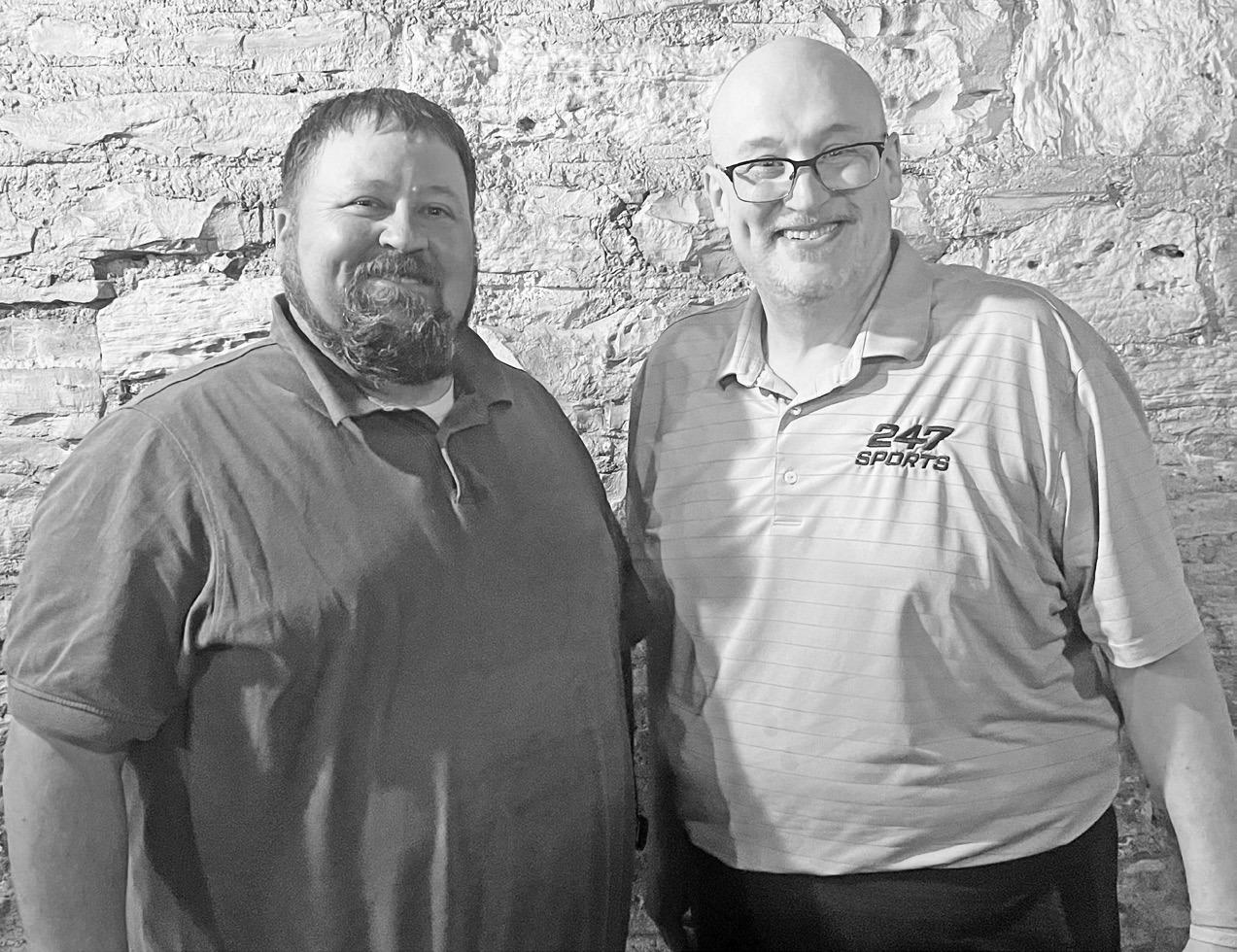
Tim Fitzgerald, of GoPowerCat. com, and longtime publisher and commentator on Kansas State University athletics, spoke to the Council Grove Rotary Club on Wednesday, offering remarks on prostate cancer awareness, K-State sports and the changing landscape of college athletics.
Fitzgerald began by urging men to know their PSA score. He said his own prostate cancer diagnosis came after a life insurance-related health screening showed a problem with his PSA, or prostate-specific antigen, score.
He said early detection is critical, noting that prostate cancer has a much higher survival rate when found before it reaches an advanced stage. Fitzgerald said he has chosen to speak openly about his experience because many men are uncomfortable talking about prostate cancer and related health issues.
“I want to get guys comfortable,” Fitzgerald said, explaining that he believes prostate cancer awareness is still years behind the public openness that now surrounds breast cancer. He said he intends to continue encouraging men to be tested, adding that he believes his message may help save someone’s life.
Fitzgerald then shifted to college athletics, saying K-State sports and college sports overall are facing difficult changes. Much of his discussion focused on name, image and likeness, commonly called NIL, the transfer portal, revenue sharing and the future structure of college athletics.
He said the current system has become unsustainable, particularly for schools such as Kansas State that do not have the same financial resources as larger programs. Fitzgerald said athletes should have rights and should not be treated as if the value of a scholarship is the only compensation they deserve. However, he said the current NIL marketplace has become difficult to control.
According to Fitzgerald, NIL began with legitimate questions about whether college athletes should be allowed to profit from their own name, image and likeness. He said the current environment has now moved far beyond those original questions, creating a market in which some quarterbacks can command millions of dollars and athletes who play little can still receive large payments.
He said the transfer portal has added to that acceleration by giving players the ability to sell their services in a freer market. Fitzgerald said he believes Congress will eventually have to address the issue, particularly because college athletics needs some form of antitrust protection. At the same time, he said he does not support simply taking away student-athlete rights.
Fitzgerald also discussed revenue sharing, saying power-conference schools are now expected to provide millions of dollars annually to share revenue with athletes. He said the system is expected to escalate each year, creating another financial burden for athletic departments. He said football is likely to receive the majority of those dollars because football produces much of the revenue that supports other sports.
That financial pressure, he said, could threaten non-revenue sports. Fitzgerald said some schools have already dropped programs such as gymnastics, swimming or tennis, and he expects more changes if college athletics continues moving toward a more business-driven model.
He also spoke about changes in sports media. Fitzgerald said his own business has had to evolve from a magazine model to a website and now to video and podcasting. He said subscription websites remain part of the business, but much more content is now available free, making it necessary to find revenue in other ways, including YouTube advertising.
Fitzgerald said misinformation has also become a growing issue, particularly on social media. He said he has seen K-State-related content online that appears to be fabricated or AI-generated, which makes reliable sports reporting more challenging.
During the question-and-answer portion, Fitzgerald said the news business has changed dramatically because information now moves instantly. He recalled earlier days in journalism when breaking a story meant working the phones and waiting for publication. Today, he said, a comment made in a room can appear on social media almost immediately.
Fitzgerald said the NCAA has been dysfunctional for a long time and questioned what its future role will be if college athletics continues moving toward super conferences and a more professionalized model. He said conferences may eventually need to rethink whether all sports should travel nationally, suggesting that some sports could be better served through regional competition.
Fitzgerald closed by sharing his affection for Manhattan and Kansas State, while also complimenting Council Grove as a community with rich history, strong culture and a beautiful Flint Hills setting.
Before leaving, Fitzgerald returned to the health message with which he began, again urging men to get their PSA score checked.
- Log in or Subscribe to post comments.