
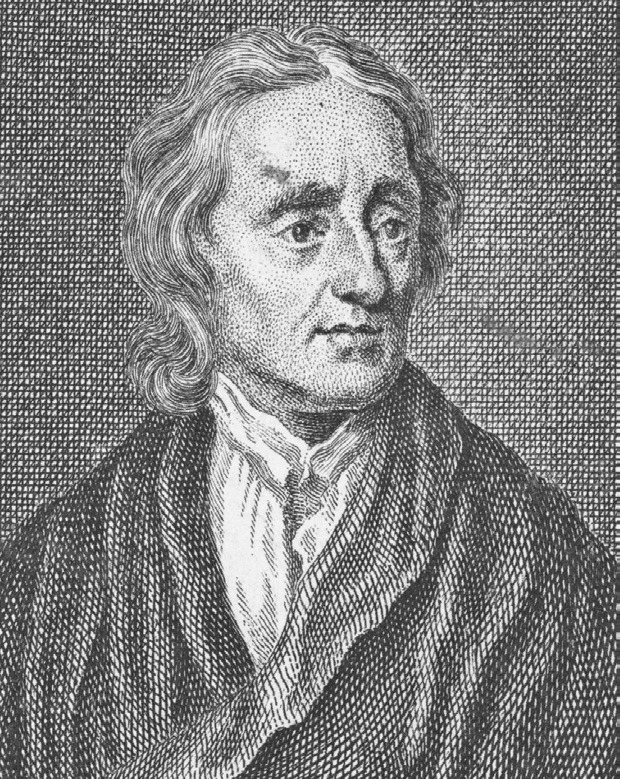
John Locke may not be a household name to many Americans, but his ideas helped shape some of the most important words ever written in the nation’s history.
Locke’s writings were known to many of the men who helped shape the American founding, including Jefferson, John Adams and James Madison. His ideas about natural rights, consent of the governed, separation of powers and religious freedom helped influence both the Declaration of Independence and the framework later established in the U.S. Constitution.
Locke, who lived from 1632 to 1704, was an English philosopher and one of the major figures of the Enlightenment. He is often called the “Father of Liberalism” because of his writings on individual liberty, natural rights, religious toleration and the limits of government power.
Long before Thomas Jefferson wrote the Declaration of Independence, Locke had argued that people are born with natural rights. In his Second Treatise of Government, first published anonymously in 1689, Locke wrote that individuals possess rights to “life, liberty and property.” Nearly a century later, Jefferson echoed that idea in the Declaration, writing that all men are endowed with “certain unalienable Rights,” including “Life, Liberty and the pursuit of Happiness.”
Locke’s influence can also be seen in the Declaration’s statement that governments are created “to secure these rights” and derive “their just powers from the consent of the governed.” Locke argued that government does not create natural rights, distribute them or redefine them. Its legitimate purpose is to protect them.
That idea was a major departure from the belief that kings ruled by divine right or that government power came from the ruler. Locke believed government was a social contract formed by the people. In that contract, citizens agreed to establish government for the protection of their rights.
Locke also argued that when a government fails to protect those rights, or becomes destructive to them, the people have the authority to change or replace it. That principle appears clearly in the Declaration of Independence, which states that when government becomes destructive of its proper purpose, “it is the Right of the People to alter or to abolish it, and to institute new Government.”
Jefferson did not invent that idea. He inherited it, then translated it into language that ordinary people could understand.
While the Declaration of Independence was uniquely American, it was also part of a larger flow of ideas that had developed over generations. Locke provided much of the philosophical foundation. The American Founders took those ideas and put them into practice, creating a government based on the belief that rights belong to the people and that government exists to protect them.
For that reason, John Locke may be someone many Americans have heard little about, but his influence can still be found at the heart of the nation’s founding documents.